Privacy Fence Installation in Dearborn, MI
Full Privacy and Semi-Private, Photo Required at Permit
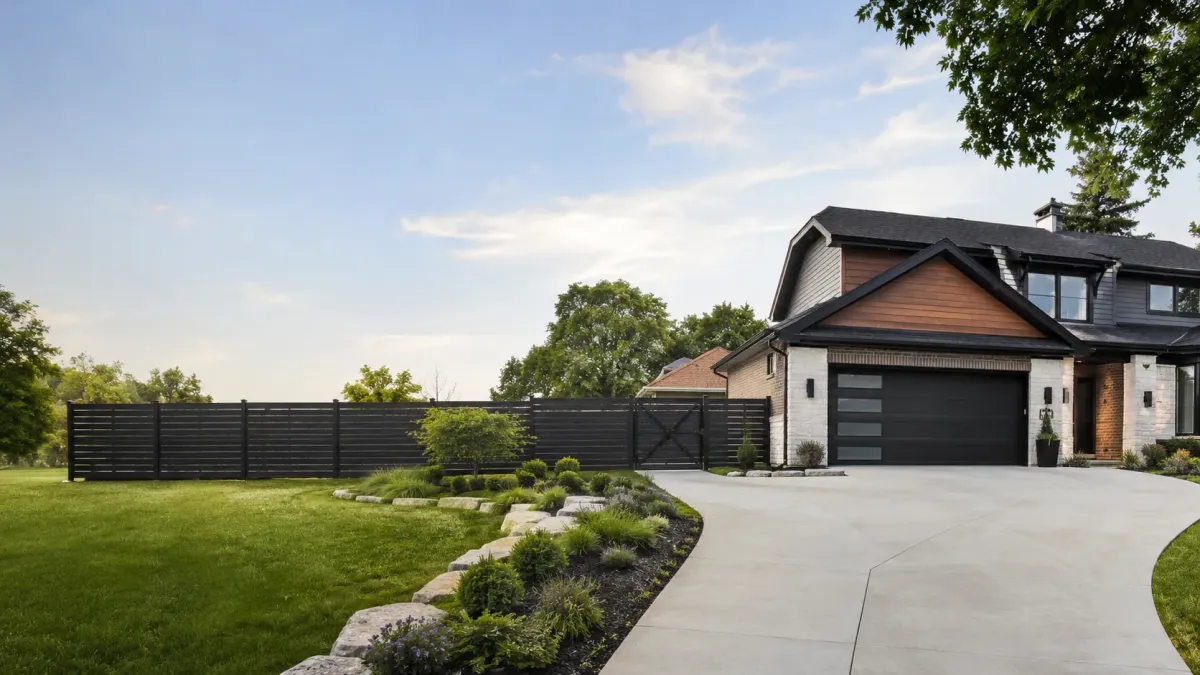
Privacy is the most common thing homeowners ask for and the place where the local rules bite hardest, so it pays to know them before choosing a panel. Full privacy and semi-private styles are permitted in Dearborn in wood or vinyl, and the application requires a photograph of the style you intend to build, which is unusual and catches people out. Height is capped at six feet in residential districts and the cap is absolute: a decorative top may add up to one foot, but it must have a solid top rail and at least fifty percent clear open view, and the total still cannot exceed six feet. So the way to get visual height without losing screening is a five-foot solid panel with a one-foot open decorative top, not a six-foot panel with something added above it. The other choice is how much screening you actually want. Full privacy closes the line completely and takes the full force of the wind, which is why post depth and spacing matter more on a solid fence than on any other type. Semi-private lets air and some light through, moves less in a storm, and still stops sightlines from a neighbouring deck. There is also a separate provision for freestanding privacy screens in the interior of a rear yard, which have to sit at least six feet clear of the line fence, the house and any other structure, and only one may be built along any common property line.
We confirm the total height including any decorative top, photograph or specify the style for the application, and collect the adjacent-owner signatures. Because solid panels carry real wind load, we size posts and tighten spacing for the exposure rather than defaulting to a standard interval, and every post goes to at least the thirty-six inch minimum in concrete. The finished side faces outward, which affects framing. Utility locates go in ahead of the dig. You get the style specification and the permit number.
What's Included in our Privacy Fence Installation service?
Full Privacy or Semi-Private
How much screening you actually want changes the panel and the wind load.
The Six-Foot Ceiling
A decorative top counts inside six feet, not on top of it.
Freestanding Privacy Screens
A separate rule covers screens in the rear yard interior, away from the line fence.
Proudly serving Dearborn, Melvindale, Inkster, Garden City, Allen Park and Lincoln Park for 11+ years.
Comprehensive Fence Installation Services in Dearborn
Tailored to Your Needs
Ten services, from chain link and wood through ornamental aluminium, pool enclosures, commercial perimeters, full replacement, repair and gates. The material you choose decides the price of the job. The ordinance written for your specific address decides the layout, the post depth and who has to sign the application, and that is where every one of our estimates starts.
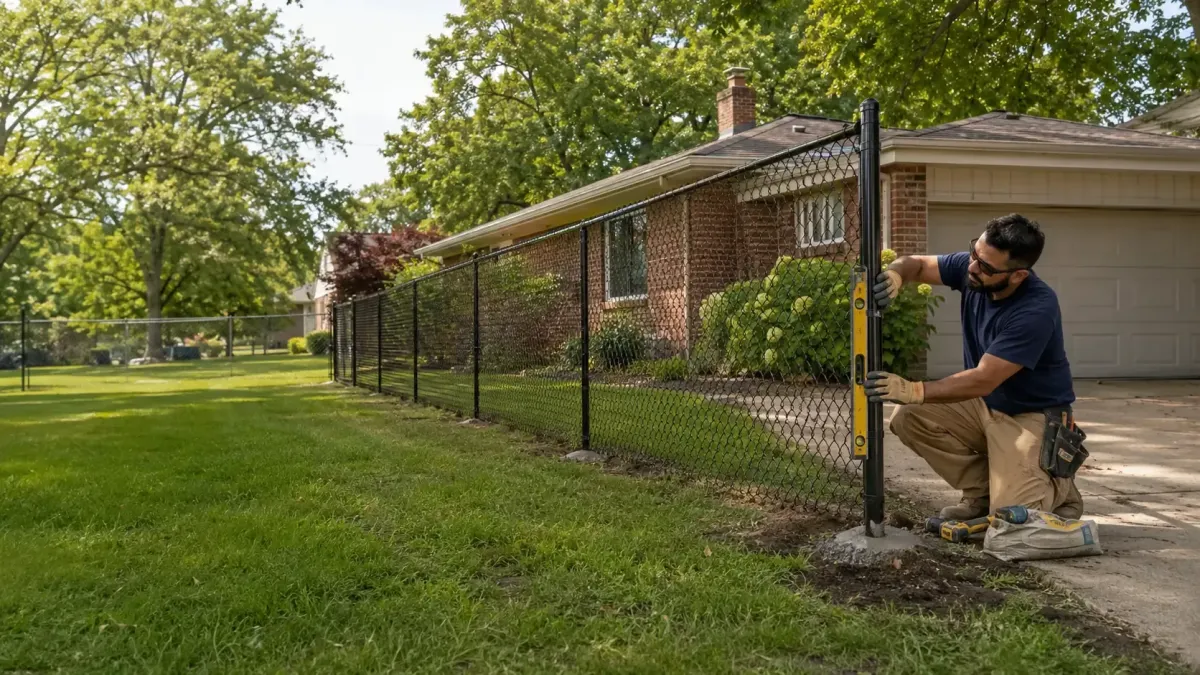
Chain link encloses the most yard per dollar and clears Dearborn's style rules without argument.
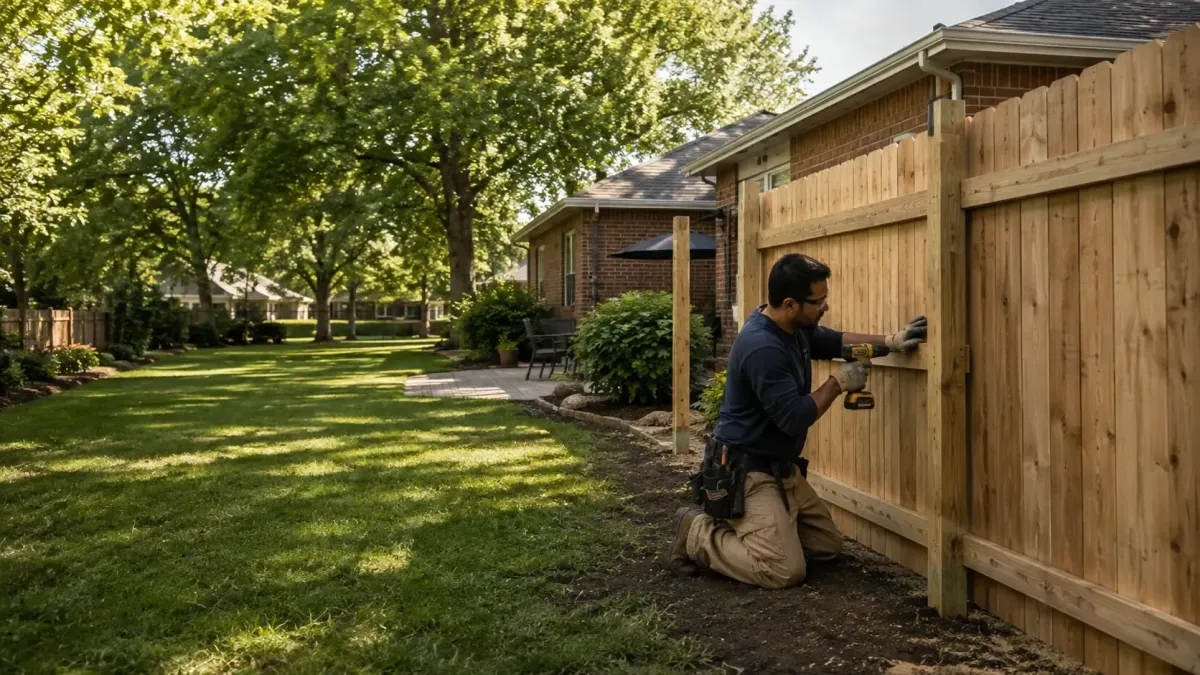
Wood gives the most style range inside Dearborn's six-foot residential cap.
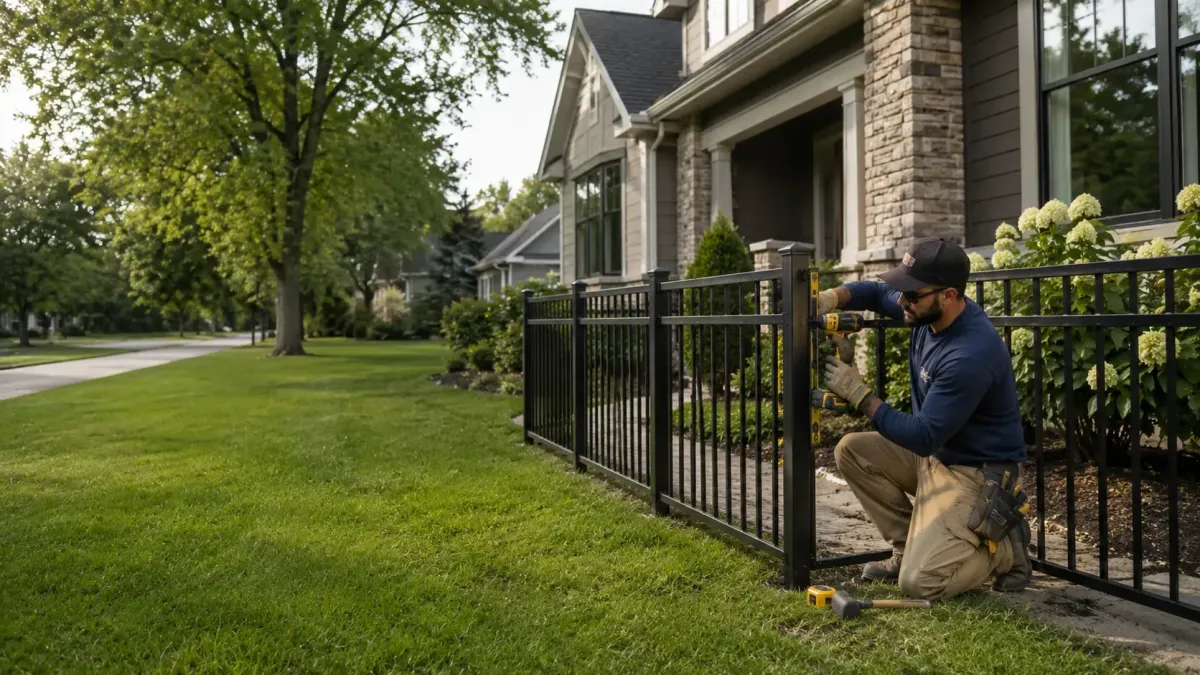
Aluminum delivers a wrought-iron look with none of the rust or repainting.
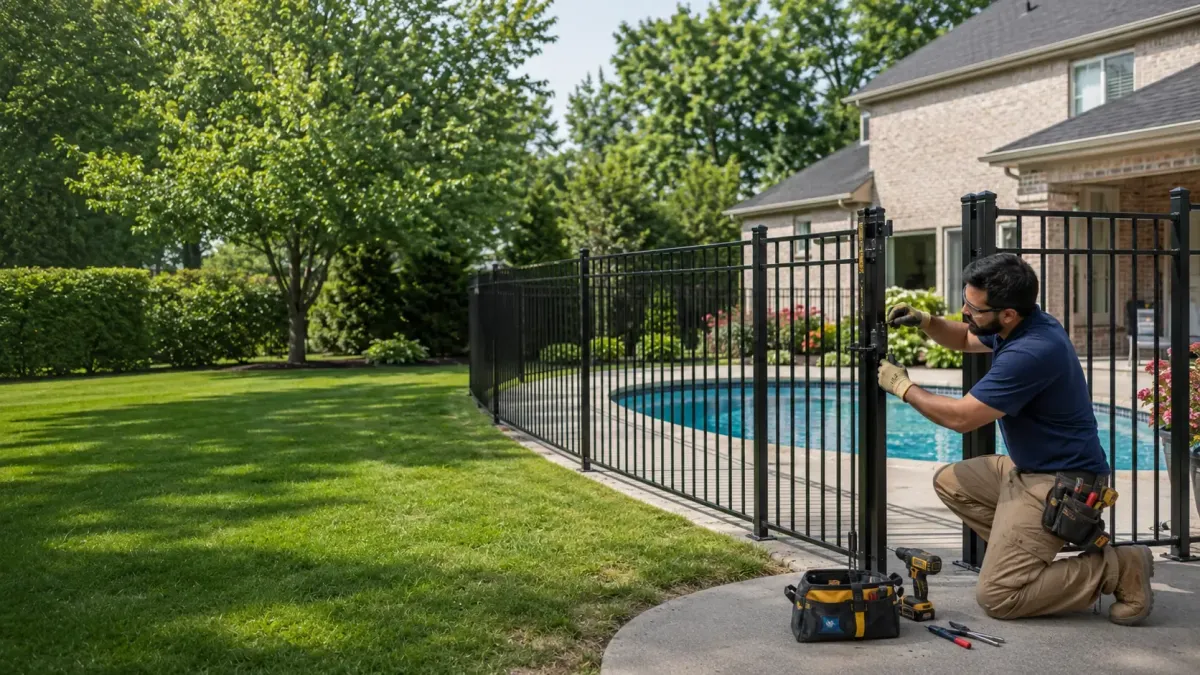
A pool enclosure is a safety barrier the city inspects, not a decorative fence.
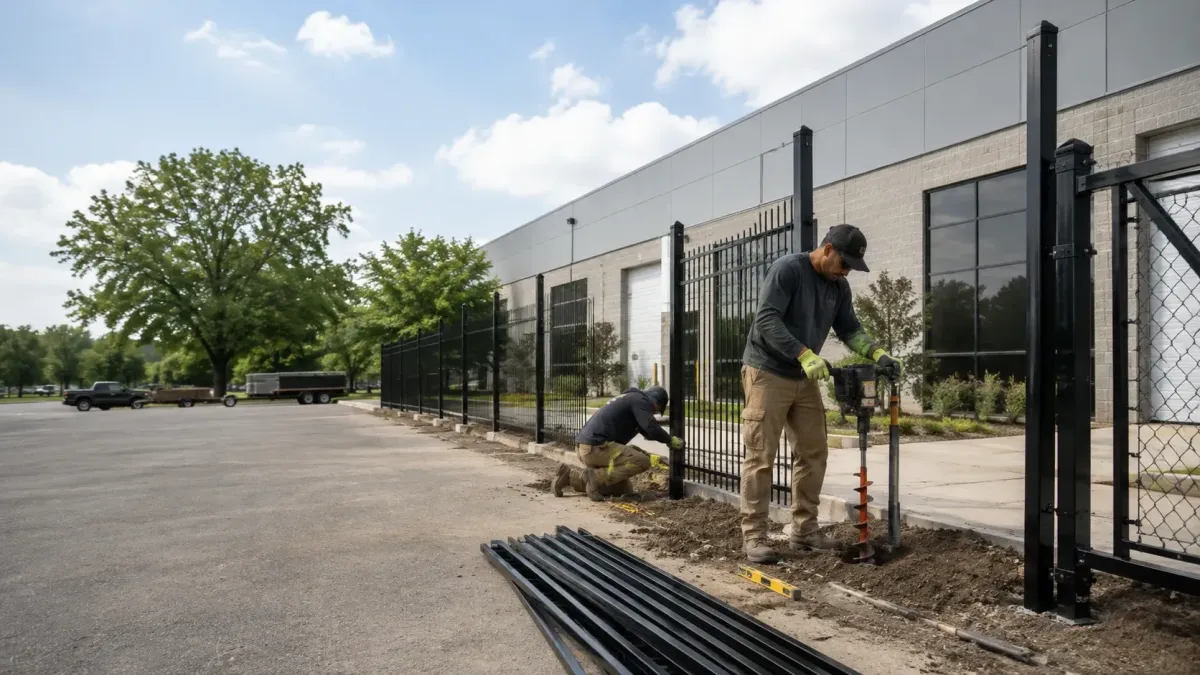
Commercial and industrial districts allow taller fencing than any residential yard.
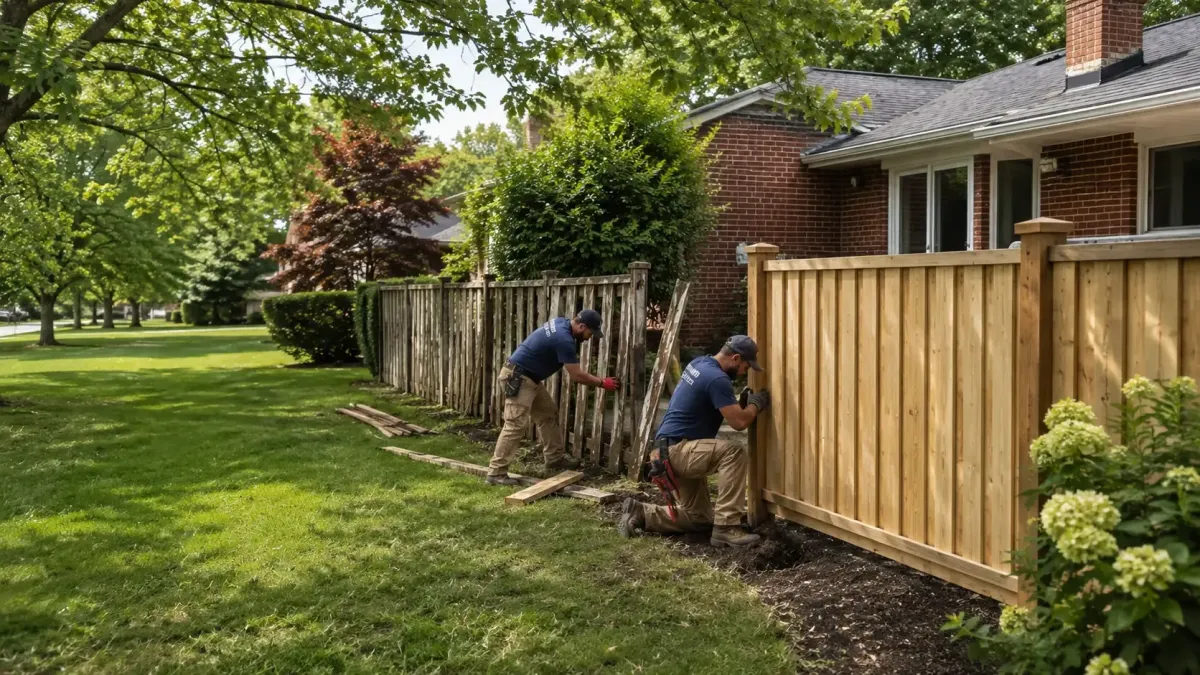
Replacing a fence means removing the old one first, which the ordinance requires.
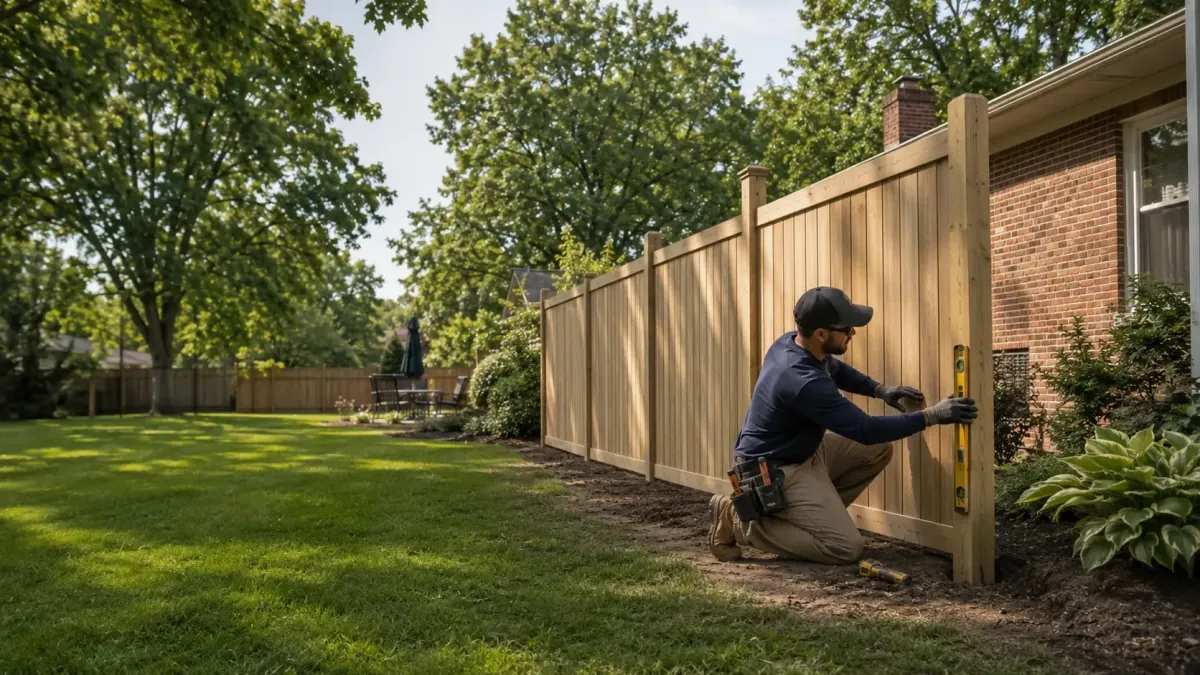
Full privacy is permitted here in wood or vinyl, to six feet including any top.
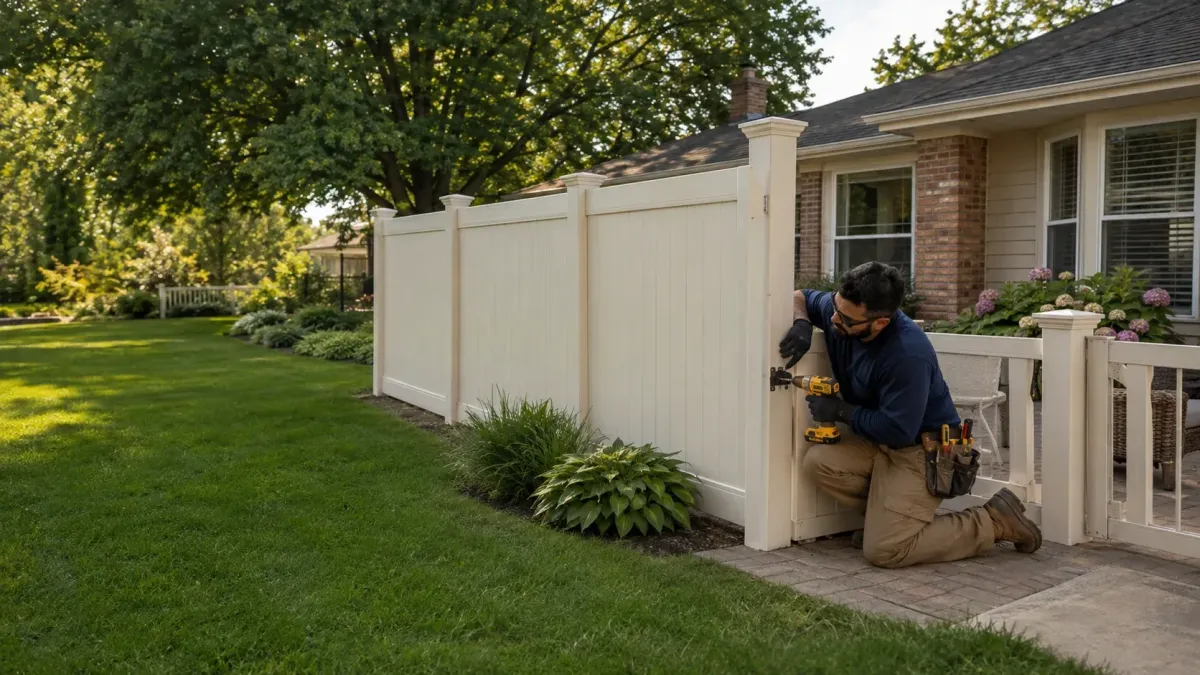
Vinyl trades a higher up-front cost for no staining, sealing or repainting.
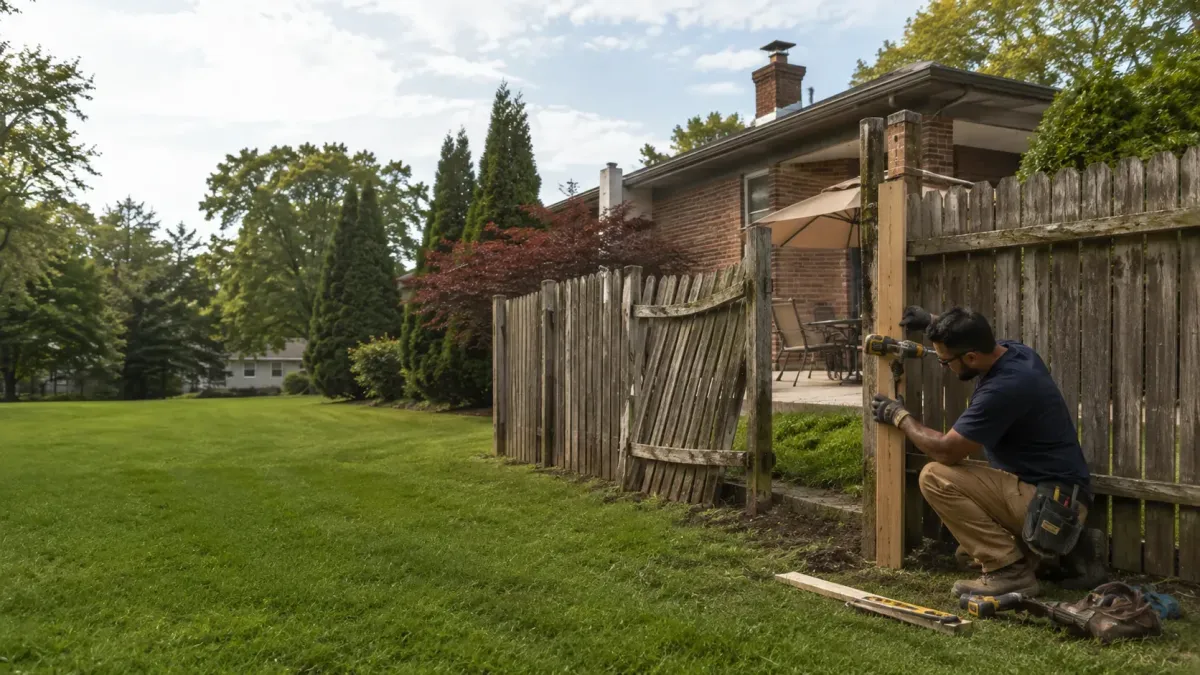
Most fence repairs are post repairs wearing the disguise of a panel problem.
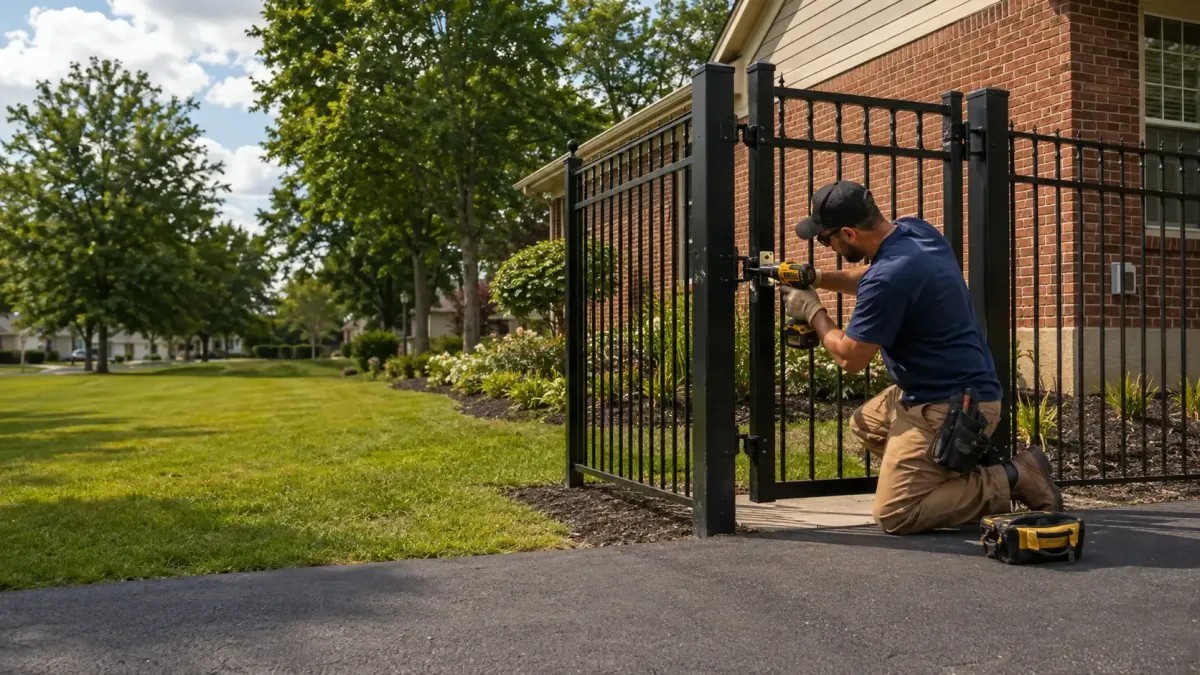
The gate is the only part of a fence that moves, so it is what fails.
Cities We Install Fences In
Fences built to the Dearborn permit, not around it
Melvindale, Inkster, Garden City, Allen Park and Lincoln Park each run their own permit process, and none of them matches Dearborn's. Post depth, front-yard height, whether a solid fence is even allowed, and who has to sign all change at the city line. We work to the rule for your address.
Frequently Asked Questions
Fence Installation can be complex, and we’re here to provide answers to common questions. Here are some frequently asked questions from our clients.
Frequently Asked Questions about fence installation dearborn michigan
Do I need a permit for a fence in Dearborn, Michigan?
Yes. A fence permit is required, and the application goes to the Permit Services Division with two scaled copies of your land survey or site plan showing property lines, easements, existing structures and the proposed fence. If you are applying for a semi-private or full privacy style, a photo of the style goes in as well. We assemble and file the package as part of the job.
What are the fence height rules in Dearborn, Michigan?
Six feet is the maximum in residential districts, and six feet in commercial districts. Industrial districts allow eight. A decorative top may add up to one foot but must have a solid top rail and a minimum fifty percent clear open view, and the overall height still cannot exceed six feet. So a five-foot fence with a one-foot decorative top is a six-foot fence.
Do I need neighbor approval to install a fence in Dearborn?
You need the signature of every adjacent property owner agreeing to both the location and the style of the proposed fence. If a neighbor cannot be reached or refuses, the ordinance sets out a path: certified mail with return receipt requesting a response within fifteen days, then an official notice from the city allowing another fifteen days. If no valid reason to withhold is given, the permit issues. Unresolved cases go to the Building Board of Appeals.
How much does a fence permit cost in Dearborn?
The city's fence permit is billed in three parts: a thirty-five dollar application fee, a forty dollar plan review fee and a fifty dollar permit fee, for one hundred twenty-five dollars total. That is the permit only and is separate from the cost of the fence itself. An application to the Building Board of Appeals, if a fence dispute reaches that point, carries its own three hundred dollar fee.
Can I install a privacy fence in Dearborn, Michigan?
Yes. Semi-private and full privacy styles in wood or vinyl are permitted, up to the same six-foot residential maximum, and the application requires a photo of the style you intend to build. The side with the more finished appearance has to face outward. What you cannot do is run any fence into your own front yard.
What type of fences are allowed in Dearborn, Michigan?
Chain-link and cyclone in metal, picket in wood, vinyl or wrought iron, and semi-private or full privacy in wood or vinyl. Masonry fences and vinyl slats woven into chain link are not permitted, and neither are razor wire, barbed wire on residential property or any fence carrying electric current. Picket tops need blunt or ball finials, a top rail, or an angle of at least ninety degrees.
Frequently Asked Questions about Privacy Fence Installation
Can I install a six-foot privacy fence in Dearborn?
Yes. Six feet is the residential maximum and full privacy in wood or vinyl is a permitted style. What you cannot do is exceed six feet overall, and that includes any decorative top. The application also needs a photo of the privacy or semi-private style you plan to build, alongside the survey and the signatures.
What is the difference between privacy and semi-private?
Full privacy closes the line with no gaps and blocks sightlines completely. Semi-private leaves deliberate spacing so air and some light pass through. Semi-private moves far less in high wind, which reduces the load on posts, and it still stops a neighbouring second-floor window from looking straight into your yard. Full privacy is the better choice at ground level, particularly along a busy road.
Does a decorative top add height above the six-foot limit?
No, and this is the most common misunderstanding we correct. A decorative top may be up to one foot, must have a solid top rail and a minimum fifty percent clear open view, and the overall height may not exceed six feet. Design it as five feet of panel plus a one-foot top, not six feet plus a top.
Can I put a privacy screen in the middle of my yard?
There is a specific allowance for it. Privacy screens may go in the interior of the rear yard provided they keep a minimum six feet of clearance from the line fence, the house and any other structure, do not exceed six feet in height, and are freestanding and self-supporting. Only one screen may be built along any common or adjoining property line.
Screen Your Dearborn Yard
What Our Satisfied Clients Have to Say About Dearborn Fence Installation
We pride ourselves on delivering great results and experiences for each client. Hear directly from home and business owners who’ve trusted us with their Fence Installation needs.
The Trusted Fence Installation Expert Near You
Ready to hear more about expert services at Dearborn Fence Installation?
Contact us today to receive a detailed, no-obligation quote.


