Commercial Fence Installation in Dearborn, MI
Site Perimeters, Yard Enclosures and Access Gates
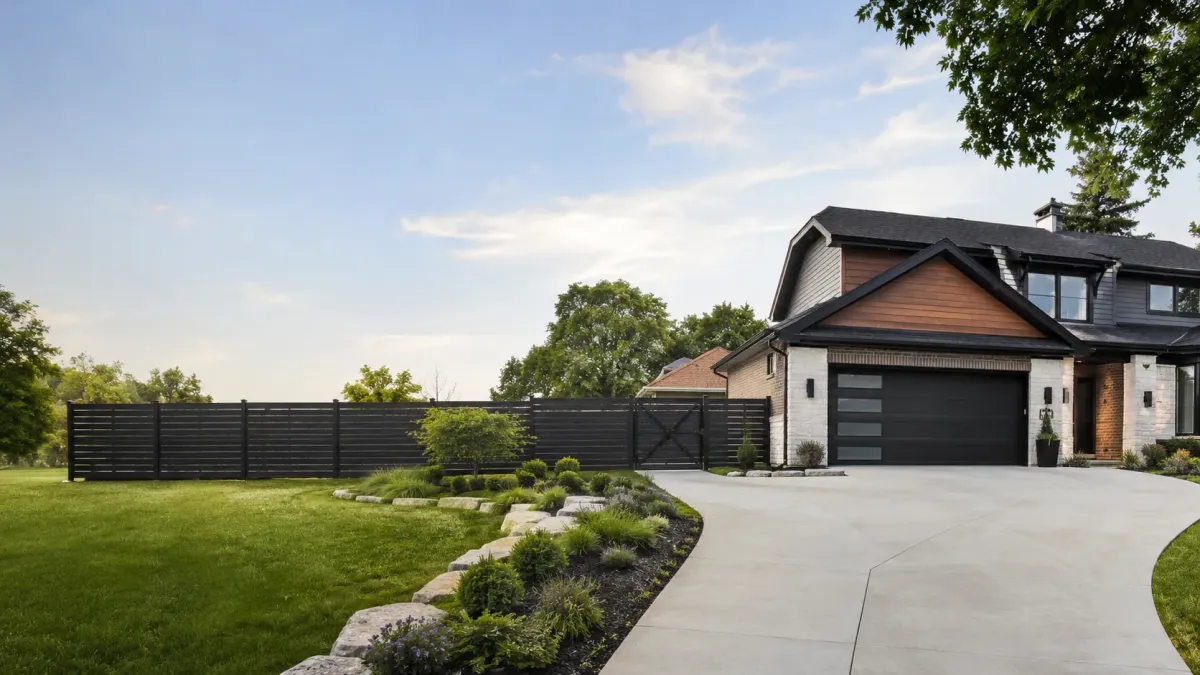
Commercial fencing in Dearborn works from a different height allowance than residential work, and that single fact changes most of the design. Commercial districts cap at six feet, the same as residential. Industrial districts permit eight. Knowing which district a parcel actually sits in, rather than which one it looks like it sits in, is the first thing to settle, because an eight-foot perimeter designed for a parcel that turns out to be zoned commercial has to be redrawn entirely. The second question is gates, and on commercial sites gates drive the perimeter rather than the other way around. A double swing gate needs interior room for both leaves to open, which is often the thing a tight yard does not have; a cantilever slide gate needs a runback roughly half again the width of the opening along the fence line. Getting that wrong means a gate that cannot open with a trailer parked where trailers always park. Beyond that, commercial runs are largely about post sizing and footing depth carrying real load over long spans, and about where the perimeter has to switch to solid screening because it backs onto residential property. We scope the site, confirm the district, and design the perimeter around how vehicles actually move through it.
We walk the site, confirm the zoning district and the height it allows, and map gate locations against turning paths before drawing the perimeter. Post sizing and footing depth get specified for the actual span and height rather than defaulted. Utility locates go in three working days ahead through MISS DIG, which matters more on commercial parcels where service runs are heavier and less predictable. Permits are filed with the site plan. You get the perimeter drawing, the gate schedule and the inspection dates.
What's Included in our Commercial Fence Installation service?
Industrial District Heights
Industrial districts permit eight feet where commercial and residential stop at six.
Vehicle and Access Gates
Swing radius, cantilever room and gate weight drive the whole perimeter design.
Screening and Buffer Runs
Solid screening where a commercial lot backs onto residential property.
Proudly serving Dearborn, Melvindale, Inkster, Garden City, Allen Park and Lincoln Park for 11+ years.
Comprehensive Fence Installation Services in Dearborn
Tailored to Your Needs
Ten services, from chain link and wood through ornamental aluminium, pool enclosures, commercial perimeters, full replacement, repair and gates. The material you choose decides the price of the job. The ordinance written for your specific address decides the layout, the post depth and who has to sign the application, and that is where every one of our estimates starts.
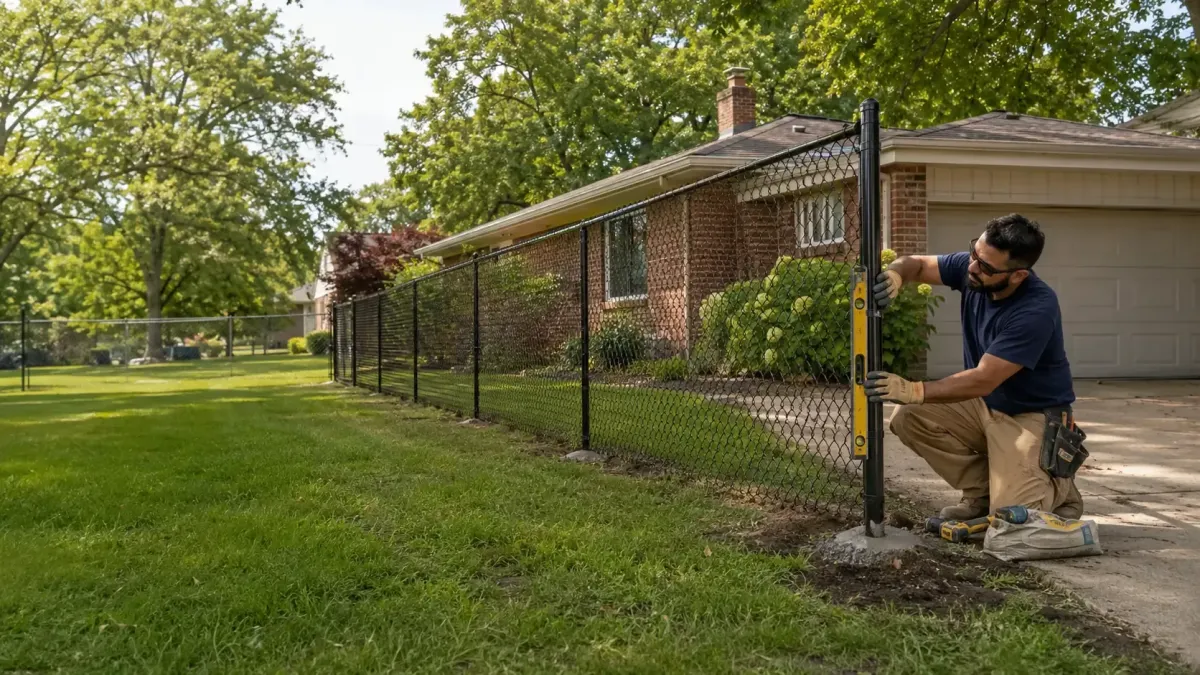
Chain link encloses the most yard per dollar and clears Dearborn's style rules without argument.
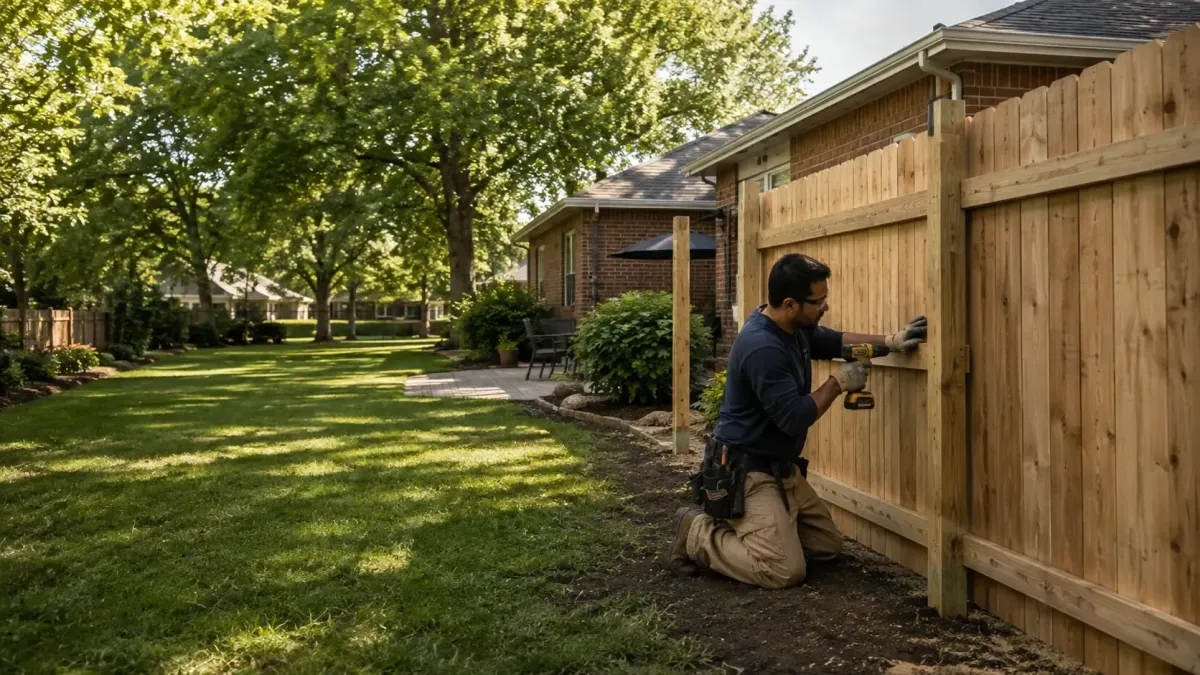
Wood gives the most style range inside Dearborn's six-foot residential cap.
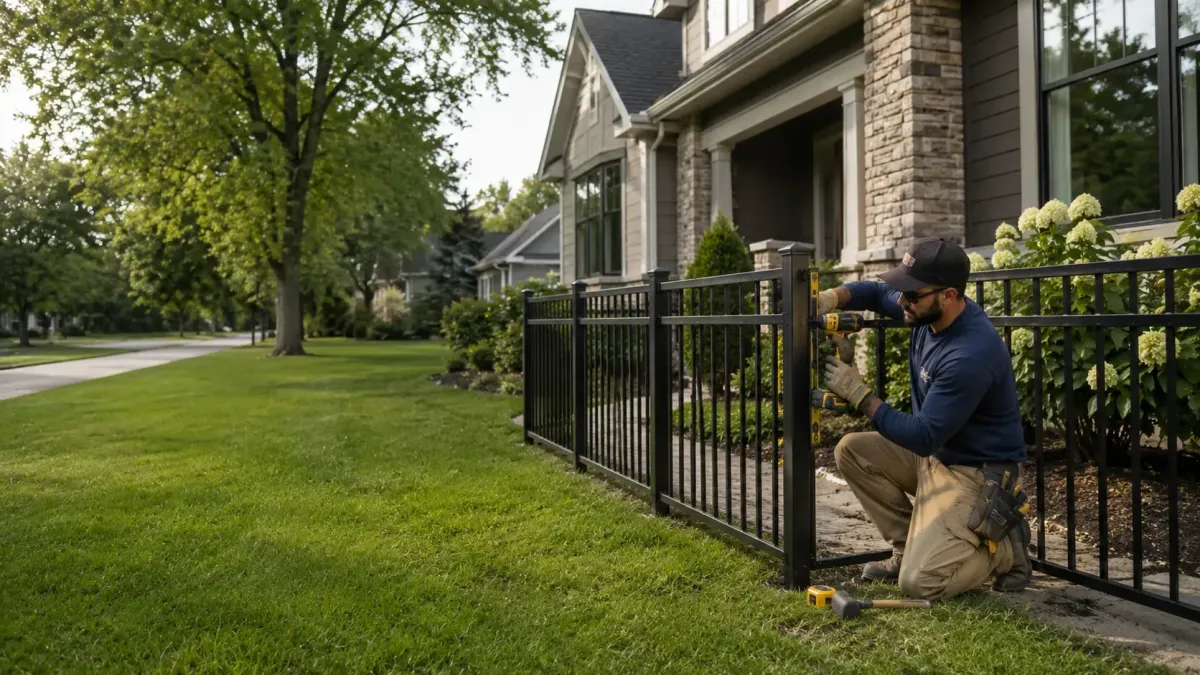
Aluminum delivers a wrought-iron look with none of the rust or repainting.
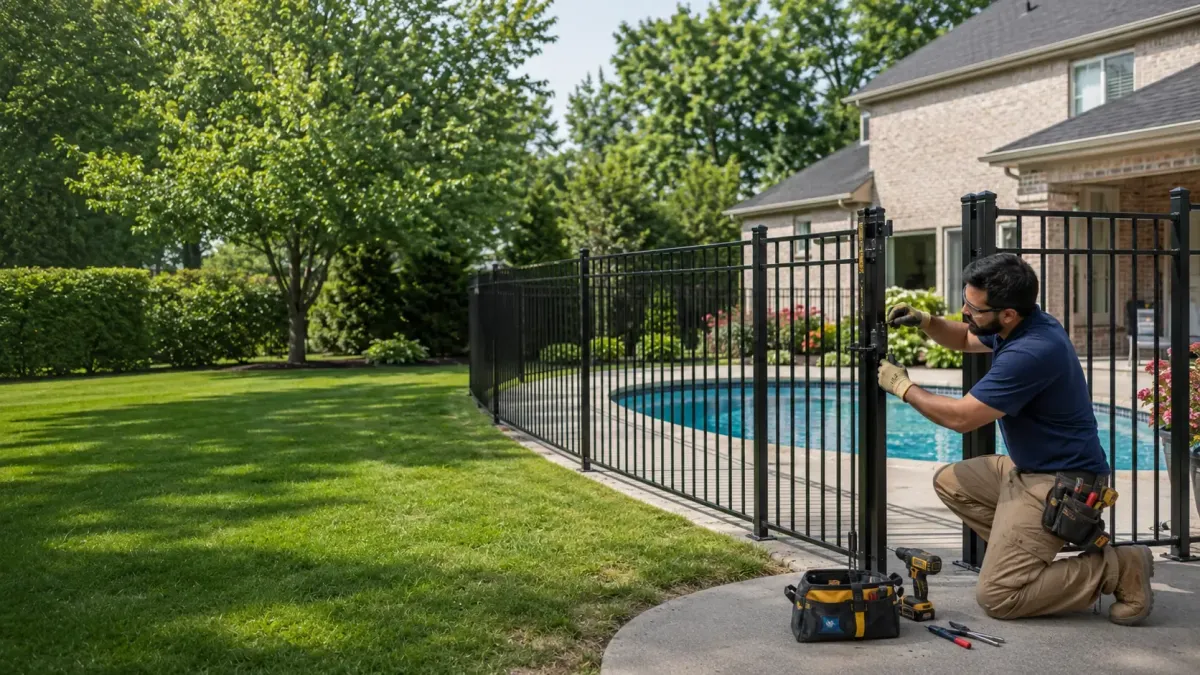
A pool enclosure is a safety barrier the city inspects, not a decorative fence.
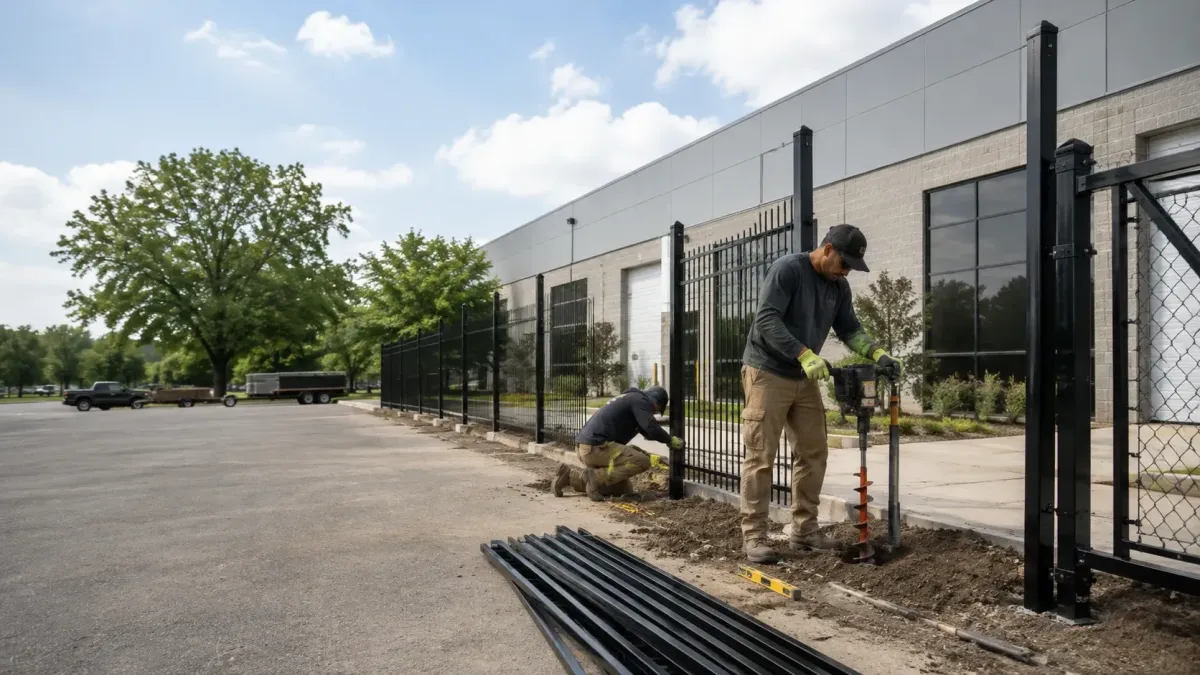
Commercial and industrial districts allow taller fencing than any residential yard.
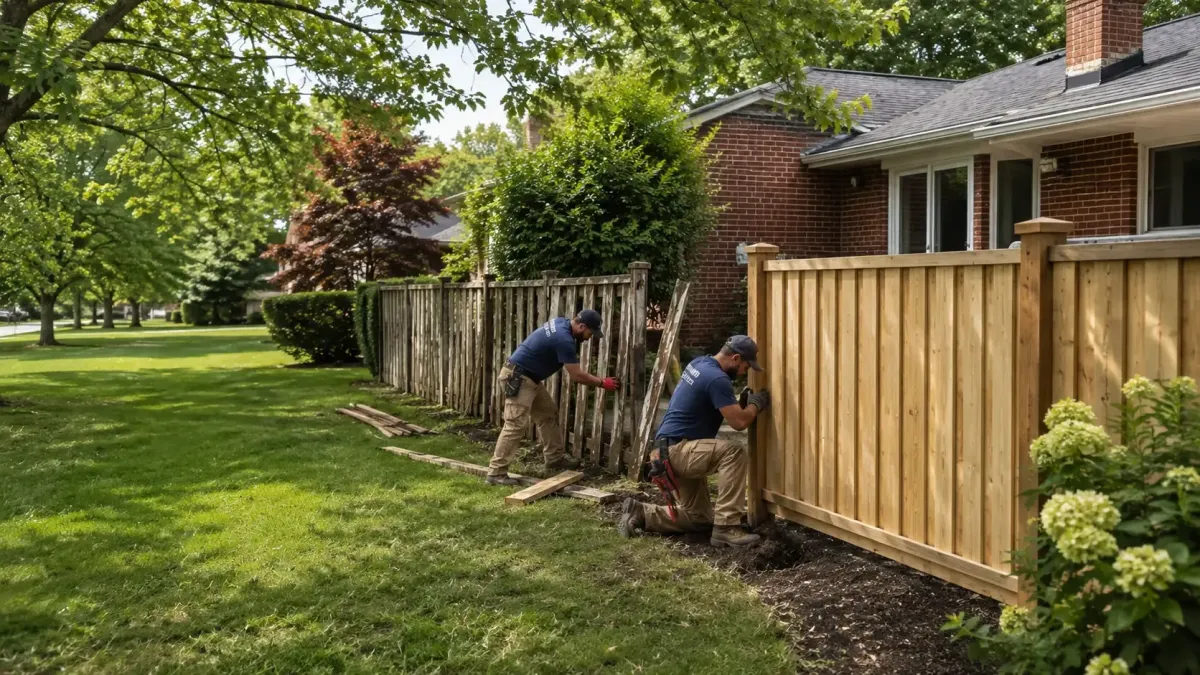
Replacing a fence means removing the old one first, which the ordinance requires.
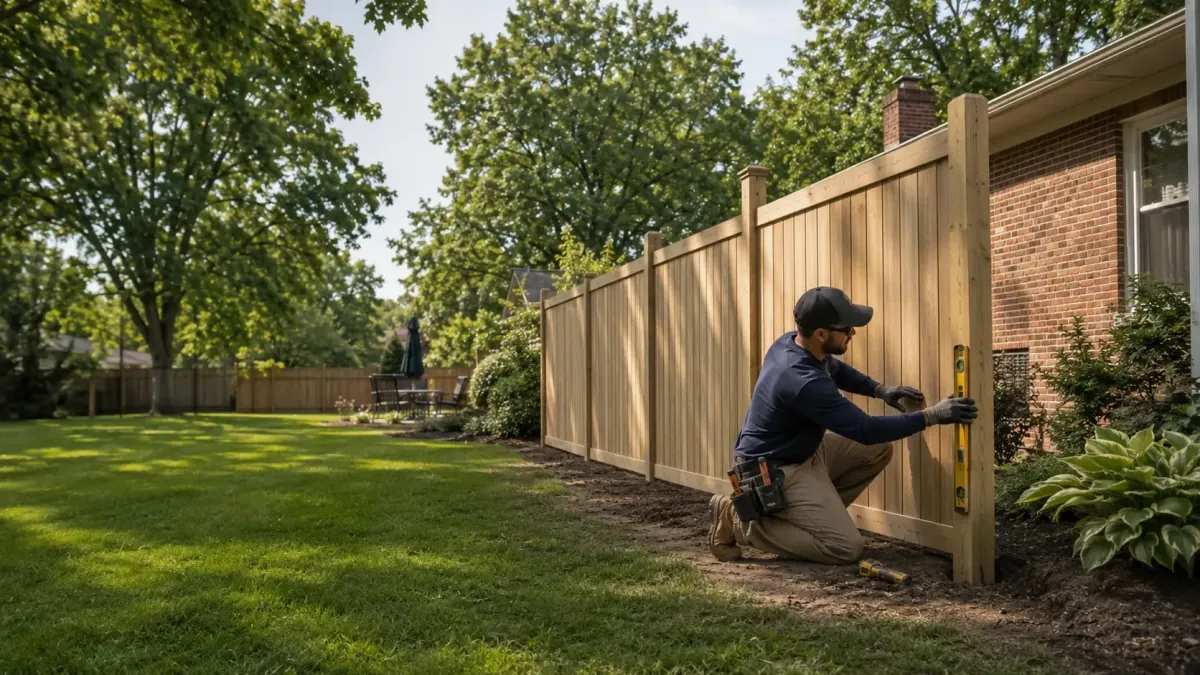
Full privacy is permitted here in wood or vinyl, to six feet including any top.
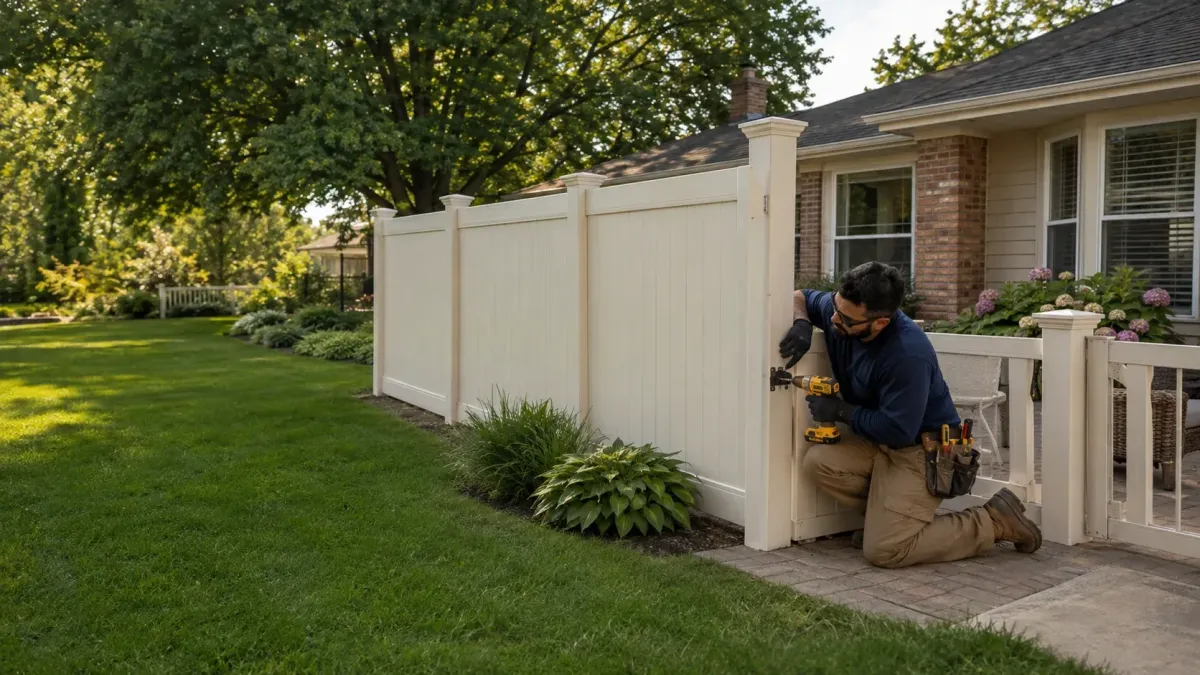
Vinyl trades a higher up-front cost for no staining, sealing or repainting.
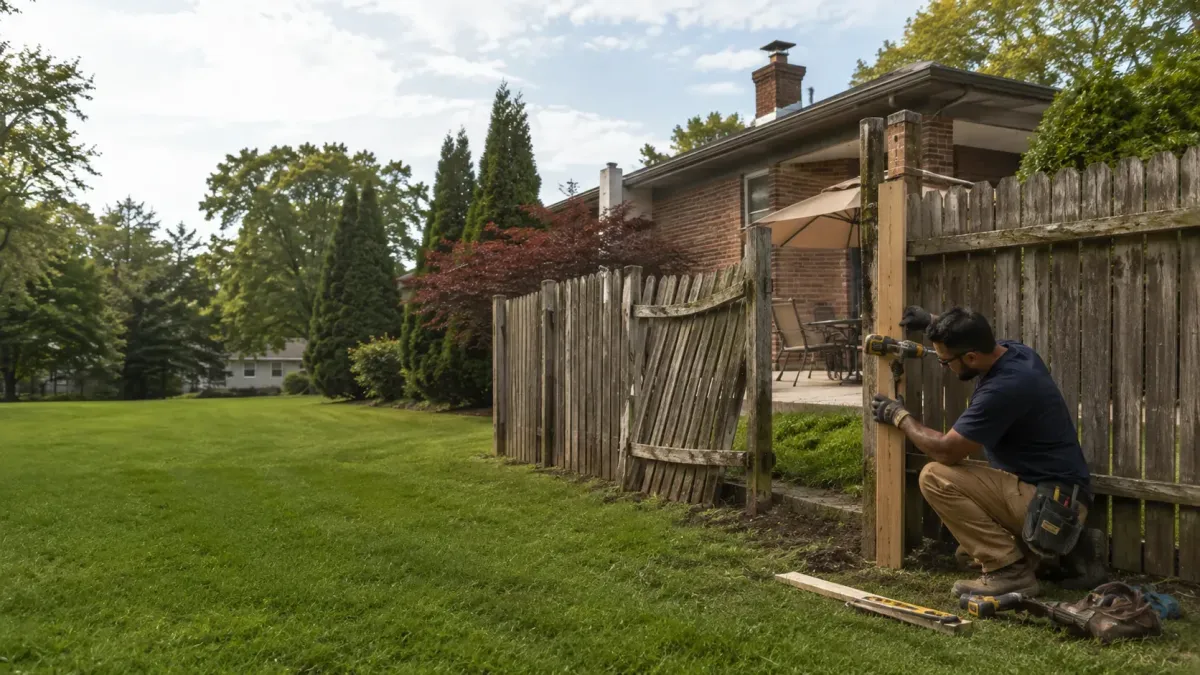
Most fence repairs are post repairs wearing the disguise of a panel problem.
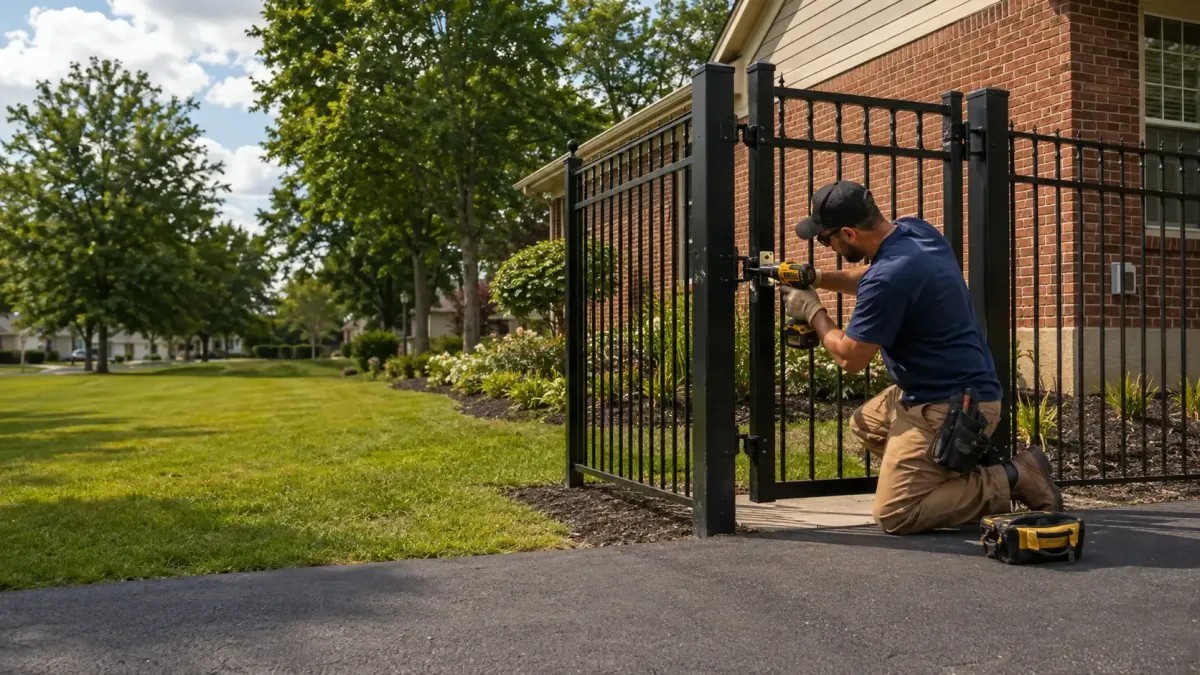
The gate is the only part of a fence that moves, so it is what fails.
Cities We Install Fences In
Fences built to the Dearborn permit, not around it
Melvindale, Inkster, Garden City, Allen Park and Lincoln Park each run their own permit process, and none of them matches Dearborn's. Post depth, front-yard height, whether a solid fence is even allowed, and who has to sign all change at the city line. We work to the rule for your address.
Frequently Asked Questions
Fence Installation can be complex, and we’re here to provide answers to common questions. Here are some frequently asked questions from our clients.
Frequently Asked Questions about fence installation dearborn michigan
Do I need a permit for a fence in Dearborn, Michigan?
Yes. A fence permit is required, and the application goes to the Permit Services Division with two scaled copies of your land survey or site plan showing property lines, easements, existing structures and the proposed fence. If you are applying for a semi-private or full privacy style, a photo of the style goes in as well. We assemble and file the package as part of the job.
What are the fence height rules in Dearborn, Michigan?
Six feet is the maximum in residential districts, and six feet in commercial districts. Industrial districts allow eight. A decorative top may add up to one foot but must have a solid top rail and a minimum fifty percent clear open view, and the overall height still cannot exceed six feet. So a five-foot fence with a one-foot decorative top is a six-foot fence.
Do I need neighbor approval to install a fence in Dearborn?
You need the signature of every adjacent property owner agreeing to both the location and the style of the proposed fence. If a neighbor cannot be reached or refuses, the ordinance sets out a path: certified mail with return receipt requesting a response within fifteen days, then an official notice from the city allowing another fifteen days. If no valid reason to withhold is given, the permit issues. Unresolved cases go to the Building Board of Appeals.
How much does a fence permit cost in Dearborn?
The city's fence permit is billed in three parts: a thirty-five dollar application fee, a forty dollar plan review fee and a fifty dollar permit fee, for one hundred twenty-five dollars total. That is the permit only and is separate from the cost of the fence itself. An application to the Building Board of Appeals, if a fence dispute reaches that point, carries its own three hundred dollar fee.
Can I install a privacy fence in Dearborn, Michigan?
Yes. Semi-private and full privacy styles in wood or vinyl are permitted, up to the same six-foot residential maximum, and the application requires a photo of the style you intend to build. The side with the more finished appearance has to face outward. What you cannot do is run any fence into your own front yard.
What type of fences are allowed in Dearborn, Michigan?
Chain-link and cyclone in metal, picket in wood, vinyl or wrought iron, and semi-private or full privacy in wood or vinyl. Masonry fences and vinyl slats woven into chain link are not permitted, and neither are razor wire, barbed wire on residential property or any fence carrying electric current. Picket tops need blunt or ball finials, a top rail, or an angle of at least ninety degrees.
Frequently Asked Questions about Commercial Fence Installation
How tall can a commercial fence be in Dearborn?
Six feet in commercial districts, the same as residential. Industrial districts allow eight feet. The district the parcel sits in is what governs, not the type of business operating on it, so confirming zoning is the first step on any commercial perimeter and it is worth doing before design rather than after.
What kind of gate suits a commercial yard?
It depends on the room available. Double swing gates are simplest and cheapest but need clear interior space for both leaves to open through their full arc. Cantilever slide gates need a runback along the fence line roughly half again the opening width but nothing in the yard itself. Where trucks stage close to the gate, cantilever is usually the only workable answer.
Can a commercial fence be barbed wire in Dearborn?
Razor wire is not permitted, and fences carrying electric current are prohibited outright. Barbed wire is restricted rather than universally available, so the district and the specific application govern. For most commercial sites the practical security answer is height, gate hardware and lighting rather than wire at the top.
Do commercial fence permits work differently?
The application follows the same route through the city, with a site plan showing property lines, easements and existing structures. What changes is scope: larger parcels mean more adjacent property owners, and commercial and industrial fence permit fees are frequently calculated on the value of the work rather than at the flat residential rate. We confirm the fee basis before filing.
Quote Your Dearborn Site Perimeter
What Our Satisfied Clients Have to Say About Dearborn Fence Installation
We pride ourselves on delivering great results and experiences for each client. Hear directly from home and business owners who’ve trusted us with their Fence Installation needs.
The Trusted Fence Installation Expert Near You
Ready to hear more about expert services at Dearborn Fence Installation?
Contact us today to receive a detailed, no-obligation quote.


